Monday, June 1, 2009

The Gay Revolution Will Be Twittered

Sacramento Bee Online Content Developer Nathaniel Miller says, "I first learned about the Iowa gay marriage Supreme Court ruling from Twitter." He's not alone. On Friday, "Iowa State Supreme Court" was the highest trending topic on the site, highlighting how Twitter has quickly become integrated into our daily lives, or at least the lives of the hyper-wired. For gays and lesbians, the service, which allows users to blast short messages of up to 140 characters each, has become not only a source of news, but a way for communities to connect. We asked the gay Twitter horde (by Twitter, naturally), how they're using it and who they're following. If you're just getting started with Twitter or want the inside scoop on the best of the LGBT Twitterverse, look no further.

How Gays are Using Twitter

Twitter was originally designed to allow people to give short status update, essentially answering the question, "What are you doing now?" But in practice, the service has become much more, especially when it comes to news. The immediacy of Twitter, coupled with its ability to deliver messages to your phone or web-client, means that breaking news is even more, to coin a Colbert-ism, "breakier." All the major news services use Twitter to deliver headlines, but for LGBT folks, gay-specific LGBT twitter news accounts serve as one-stop gay wire news services. Camilo Arenivar of L.A. says Twitter "can be used for news reliably, I like it more for that than anything else, it can be incredibly useful for specialized news." Kevin Cobb of Ft. Lauderdale explains that "I follow @qrty and @tlrd for national news + entertainment; @SteveRothaus for South Florida news."

Twitter's not just for breaking news, however. Unlike traditional one-way media, Twitter allows users to respond to each other, meaning that news becomes a conversation. Consider Same Sex Sunday, an idea hatched by the kids over at the Billerico project. The concept is simple: Tell folks about your favorite gay Twitterers and include the "hash tag" (a way of making similar tweets easily searchable) #samesexsunday. By putting like-minded folks in touch with each other, news carries.

The community aspect of Twitter had special significance for LGBT people the last few months in a way that is both radical and practical. As Prop. 8 protesters marched and rallied for equality, they used the service to organize and keep each other abreast of what was going on as it happened. Bao-Viet Nguyen of California says Twitter is "great to follow during marches and rallies… [I] got updates on March route changes, celeb sightings, police activity, new "chants" going on in other parts of the march, etc…" I have personal experience with this. During the Prop. 8 marches in L.A. I used my Twitter account (that's japhy79, folks) to keep updated with fellow marchers as well as get news about where the police were moving crowds and let those at home get an on-the-ground view of the marches. Prop. 8 protester Mark Oshiro tweeted his arrest after an altercation with a Yes on 8 supporter and the news was up online in minutes. As civil organizing tool, Twitter is an ad-hoc Nextel device on steroids.

10 Gay Twitterers You Need to Follow

So, who should you be following? We asked around and here are the hottest LGBT twitters out there today (as well as some personal favorites):

qbug_bigger @qrty: Oh, sure its self-promotion, but Queerty's own Twitter feed was mentioned by nearly every person we asked (and on Twitter, anyone can reply to you, so it wasn't just our friends). You get our latest posts sent to you as soon as they're posted, plus we often live-tweet important events, such as the inauguration and the Prop 8 Supreme Court hearings, giving our Twitter followers a sneak peek at our news stories as they happen.

t_lit_up_towle_bigger @tlrd: Andy Towle's twitter account is a rehash of what's on his site, but the man has mad skills at covering New York gay news and gay violence reports. Since we're talking about Towle Road, his last name is pronounced "toll." We only mention it because everyone keeps talking to us about Andy "Towlie." Consider it our good citizen move of the day.

davidbadash2009a_bigger @davidbadash: New York based LGBT activist David Badash is Twitter's gay uncle. In addition to keeping folks updated with news, he can be awfully chatty and enjoys discussing the latest news with people who reply.

fb_prop8_logo_button_bigger @noonprop8: Love or hate em', Equality California's Twitter account is a great source for authoritative news about the LGBT struggle in California.

g_bigger @gaysdotcom: While we don't have time for the world's "social network" for gays and lesbians, Gays.com's twitter feed is uniformly excellent, pulling up stories that don't get covered elsewhere.

qs_logo_twitter_bigger @queersighted: A very gossipy London-based feed, you're as likely to get tips about how to date via iPhone as you are to hear news about UK gay issues.

flyer05-both-h_bigger @qpocc: A good example of an "event-based" Twitter, Queer People of Color is covering the conference by the same name held this weekend at UC Davis. Feeds like this become watering wells for participants before, during and after the event, keeping the discussion going long after you're back home.

sig_mug_bigger @msignorile: Michelangelo Signorile's own feed is an inside look at the work that goes into his radio show (as well as the occasional random discussion about glue traps) and a good example of a "celebrity" twitter done right.

overtun8_crop_bigger @JoinTheImpact: The official Twitter of the Join the Impact site is a great resource for the latest demonstrations and protests across the country, if you can wade through the middle-school-esque acronyms and overuse of exclamation marks.

rainbowflag_bigger @queerunity: A little gem of a Twitter feed, Queer Unity is a San Francisco based feed that wears its activist heart on its sleeve. Worth following just to see the occasional flame wars that erupt between them and social conservatives who provoke them via tweets.

Are you on Twitter? Who are you following? Share with us in the comments.

–Japhy Grant

Lazy Twitter stars call in ghost writers

Ashton Kutcher and Demi Moore

Tweets by Kutcher and Moore have left fans feeling cold

CELEBRITIES are hiring ghost writers to help them twitter in the latest social networking craze as the burden of writing 140-character messages for fans proves too onerous.

“Tweets”, as the messages are called, are supposed to be composed and dispatched live across the internet.

But there are growing suspicions that celebrities’ and politicians’ tweets are written by speechwriters and publicists.

Last week it was disclosed that the rapper 50 Cent had handed over his tweets to a ghost.

Earlier this month the New York star, whose real name is Curtis Jackson, told 215,000 fans: “My ambition leads me through a tunnel that never ends.”

The words were not live but were lifted from an earlier interview by Chris Romero, who runs 50 Cent’s web pages. Last week Romero admitted that his boss did not use Twitter but said “the energy of it is all him”.

The comedian and author Stephen Fry, 51, probably Britain’s most popular twitterer, said it was a joy and a duty to keep posting on the site – “and it keeps boredom at bay at airports”.

Since Twitter emerged from a San Francisco high-tech company in August 2006, its users have developed their own code of conduct: be engaging and personal, do not embarrass anyone else and do it yourself.

America’s most popular sporting twitterer, the basketball star Shaquille O’Neal, last week told an American newspaper: “It’s 140 characters. If you need a ghost writer for that, I feel sorry for you.”

Britney Spears, the 27-year-old singer, advertised for staff to help her compose tweets.

Fans can distinguish between the professional tweets, which promote Spears’s music, and those written by the star herself. Last week she confined herself to bland messages such as Friday’s “had a great dinner with all of the [concert tour] dancers last night”.

But Demi Moore, 46, and her husband Ashton Kutcher, 31, tease one another in an affectionate style that sometimes leaves fans feeling cold.

The number of people twittering is growing fast, with the latest estimate at about 10m regular users worldwide.

The website has some practical uses. The Red Cross says it works well in emergencies: Twitter users broadcast the first accounts of last November’s terrorist attacks on Mumbai, helping rescue services reach victims quickly.

When a US Airways flight ditched in the Hudson River in New York in January, the first news appeared on Twitter within four minutes.

Sceptics, such as the television satirist Jon Stewart, suspect Twitter will prove a short-lived fad. A correspondent on his show said: “There’s no surprise young people love it – according to reports of young people by middle-aged people.”

This weekend Fry, posting from Bali, gave an answer to what to do when he runs out of things to tweet about: “Oh yes. E-mail backlog.”

Why You Should Give a Tweet About Twitter

If you just came back from a year’s vacation in the Crab Nebula, perhaps you haven't heard of Twitter. It’s a social-messaging service that lets you stay hyperconnected by incessantly sending and receiving micro-updates to and from friends, family -- and complete strangers. So if you just had a "yum-e latte!" you can write a text to that effect on your phone and tell everyone on your Twitter list. This vital information will also be posted on your Twitter webpage, where people can read it and bask in the radiant glow of your happy and successful life. Or hate you. Their choice.

But is Twitter useful for anything? tour_1 Till now we thought not, because...well, we really don’t care if someone we don't know (or do know) just enjoyed a latte. We have better things to do. Like "watchin TV" or "bleachin d shower curtain" or "goin 2 d pub. LOL!" Turns out, though, that there are some serious enterprise uses for Twitter and a growing number of entrepreneurs are using it to promote themselves. Check out the Little Biz blog at Search Engine Watch, which has helpful details on the Twitter tools you can use to tell the world about your business. Or your yum-e latte. Wotev.

Facebook for small biz. It’s not hip like Twitter but the SBA just launched its own social-networking service for small businesses. It goes by the clunky name of Business.gov Community. It’s a place where people share information and experiences related to starting and running a business. The technology is more Steelcase than Aeron Chair but there’s plenty to learn if you spend a little time to connect and converse with others in your field.

A not-so-social networker. SBA press office director Mike Stamler is building a reputation as a less-than-social fellow. Rather than befriend members of the press and encourage them to write good things about the SBA, Stamler monitors the news and berates anyone with negative things to say about the SBA. We’ve been on the receiving end a couple times ourselves. (It's not what you’d call constructive criticism.) Now Stamler is going to court with his arch-enemy Lloyd Chapman, president of the American Small Business League and longtime critic of the SBA’s small-business contracting program. Chapman is suing the SBA for withholding records related to its contracting program and for libel, claiming Stamler has mounted a campaign to smear the ASBL in the media. Exhibit A: Stamler’s expletive-laced e-mail to the Long Island Business Journal, which dared to quote the ASBL in a story. The LIBJ wondered if maybe Stamler had too many lattes that morning. But Stamler says he doesn’t drink coffee. Hmmm. He just doesn’t seem like a chai tea kind of guy.

How to Speak Twitter

A TWITTER GLOSSARY

At Reply, or "@reply": A direct tweet sent to another Twitter user.

Dweet: Tweet sent while drunk

Hash Tag: The "#" sign. Allows Twitter users to group tweets by topic, making it easier to search particular conversations using Twitter Search.

Link: Including a URL in your tweet.

MisTweet: A tweet one later regrets.

ReTweet: To repost something that's already in the Twitter stream. Usually preceeded by "RT" and "@[username]," to give credit to the original poster.

SnapTweet: A tweet that includes a photo taken with a cell phone, uploaded to Flickr and posted to Twitter via snaptweet.com.

Twittcrastination: Procrastination brought on by Twitter use.

Twadd: To add someone as a friend or follower.

Twaigslist/Twebay: To sell something on Twitter.

Tweeter/Twitterer: Someone who uses Twitter.

TwinkedIn: Inviting friends made on Twitter to connect on LinkedIn.

Twittectomy: To remove someone from the list of people you follow.

Twitterati: The A-list twitterers everyone follows.

Twitterfly: Twitter's version of a social butterfly, marked by the extreme use of @ signs.

Twitterlooing: Twittering from the bathroom.

Twitterpated: Overwhelmed with Twitter messages.

Twittfeinated, Twigged Out, Twired: To be so hyped up on twittering that you cannot sleep.

Data: Twitter Fan Wiki

Simon Cowell criticises fellow celebrities for Twitter obsession

Talent show producer Simon Cowell has hit out at the Twitter craze in which celebrities have been publishing updates about their day to day activities.

Simon Cowell: Simon Cowell criticises fellow celebrities for Twitter obsession
Simon Cowell is thought to have lost patience when American Idol co-host Ryan Seacrest used his Twitter page to describe Mr Cowell as looking old Photo: PA

The X Factor guru criticised friends who use the micro-blogging site where users constantly reveal tiny details of their lives.

Mr Cowell, 49, said told American television viewers: "Why would you want to talk to people like that? It's like phoning someone randomly whose number you don't even have and saying: 'Hi, it's Simon, I went out with my family this weekend'."

He is thought to have lost patience when American Idol co-host Ryan Seacrest used his Twitter page to describe Mr Cowell as looking old.

The criticism follows a survey which identified Russell Brand as the most self-obsessed British celebrity based on usage of Twitter.

Celebrity gossip website Holy Moly analysed stars' use of the site and accused them of using it purely to promote themselves.

It found that comedian Brand has 143,548 fans following his regular updates of his antics but is only interested in 14 fellow Twitterers enough to bother following their progress. One of those is Jonathan Ross while another is fellow comic David Baddiel.

The huge gulf between his followers and those he is following sees Brand tops Holy Moly's 'Celebrity Twitter Narcissism Rating' with a score of 99.9902 per cent.

Singer Lily Allen, 23, apparently has almost as big an ego as Brand with a rating of 99.9900 per cent, according to the research. The singer has 101,500 followers but is tracking just 10 people – including fellow pop star Britney Spears, model Alexa Chung and comic Alan Carr.

Third in the showbiz league of shame was outspoken DJ Chris Moyle, who has 106,013 followers but is following just 13 people. His rating is 99.9877 per cent.

Among British celebrities, Twitter addict Stephen Fry has the most followers, with 348,699. Fry, who recently gave fans a running commentary when stuck for an hour in a lift at London's Centre Point building, has somehow found time to track 55,251 fellow Twitterers.

Does the Twitter Whale = Twitter Fail?

For now, Twitter remains untouched on its journey up the road as a Social Network Superstar.

Twitter’s next big hurdle on its ascent may be its biggest to date: turning a profit. Twitter needs to start making money. Ideas are plentiful, but execution remains to be seen. Everyone knows it; even Twitter’s brass have fallen just short of claiming 2009’s objective will be to make money.

But seemingly unnoticed, the frequent overload of Twitter servers seems to be the ‘elephant’ in the room that may hinder efforts to create and maintain revenue.

As recently as yesterday, Twitter’s faithful got a wakeup call that Twitter’s ‘Fail Whale’ was still circling the parking lot. It began by stalling out on avatars, tweets and DMs and finished by crashing down the service for 45 minutes.

With my own Twitter usage I have experienced some of the site’s flakiness. If Twitter can’t abolish all potential Fail Whales, will it ever be able to capture the market confidence necessary to make the money its popularity seems to promise?

It is important to point out that Twitter has made significant strides to drive the Whale off of its site completely. What at first seemed to be glitches that Twitter could accept as necessary evils have been eliminated. But as the site’s thoughts turn to profits from its users and advertisers the question arises: will any site stall-outs will be accepted?

As long as Twitter remains a free service, occasional glitches are easily overlooked. After all, what do users really have to complain about? Just about the only thing users have to lose is time and, with the affinity out there for Twitter, it seems to be something with which users are willing to part.

An example of this can be seen in a recent quote by Jason Kincaid of TechCrunch. Of the recent 45 minutes of downtime, he said it was, “not too shabby”. I know I have personally thrown fits, canceled accounts and sent scathing e-mails for considerably less.

As soon as money becomes involved, expectations rise dramatically, especially with a site like Twitter. When services go from free to something that users are paying for, they will suddenly have much heightened expectations. The service was always there. Service you can count and rely upon is what users believe they are paying for. No matter how much allegiance users have with Twitter, this will be the case when they start paying their money.

If you were a Twitter users paying for premium value-added services, would you be willing to tolerate glitches such as disappearing tweets, avatars and DMs? Or, if you were an advertiser with Twitter would you be willing to accept that your ads weren’t getting viewed as often as expected due to slow and unreliable services? Certainly not.

As Twitter enters the commercial phase it must be cognizant of the fact that making sure its Whale gets harpooned will not be priority of a technical nature, but rather of a commercial nature. How it handles and prioritizes its commercial aspects will become vital to Twitter’s success.

Field recording, pre-amps, and Twitter

Reader Craig Messerman is hitting the trail to record the sounds of the world around us. He’d like to use his MacBook in the process, but has hit a snag. He writes:

How can I use an AudioTechnica Pro24 stereo microphone for field recording with my MacBook? It makes beautiful recordings with my Sony DV camcorder (with plug-in power), but I can’t get high enough gain with the MacBook. It has a battery, and I’ve tried plugging it into the computer’s audio input, and into a Griffin iMic (first gen.). It doesn’t matter what I set the iMic switch to, it’s just no good. All I get is pretty good close up recording like we can with our Shure SM57 and 58. Any thoughts?

As much as I love geeking out over microphones and recording setups, I understand that this question has the potential to interest exactly two people—me and Craig. But hang on, there’s a moral here.

Before we get to that moral, the answer is that because your MacBook lacks a FireWire port (so you can't use a FireWire bus-powered audio interface) you need either a battery-powered pre-amp that sits between the microphone and your MacBook (this pre-amp, for those that don’t know, will amplify the mic’s signal) or you do what others in the business do and use a digital field recorder. These things are made by any number of companies including Sony, Marantz, Samson, Korg, Yamaha, Edirol, and Tascam; use removable media (Compact Flash and SD cards); and often include a microphone.

But this is Mac 911, after all, so let’s address the pre-amp-to-MacBook issue, which leads us to the moral.

I did my best to scour the Web for battery-powered pre-amps and came up with a few schematics but no single great suggestion. So, I turned to the power of Twitter (where I appear as @BodyofBreen). I put out a general call for such a pre-amp and follower/AV tech/all-around-helpful-guy Chris Eschweiler (@chrisesch) piped in with the suggestion that I check out Sound Devices’ $350 MM-1 Portable Mic Preamp With Headphone Monitor. It’s powered by AA batteries and offers impressive audio specs.

The moral, of course, is that good as Google can be, it sometimes doesn’t hurt to raise up your head and shout, “Say, anybody here have a recommendation for….”

Twitter: It’s not just about breakfast.

Google Can't Afford Twitter: No Longer a Growth Stock

Rumors that search giant Google (GOOG) was interested in purchasing the skeletal social networking site Twitter were quickly corrected by both companies, who are now indicating that a partnership is in the works. Much of the commentary surrounding a Google-Twitter partnership focuses on the breathtaking rise of the latter, which has gone from zero to a purported billion dollar plus valuation in under two years.

The bigger question though is why Google is not attempting to buy Twitter outright. Product-wise, Twitter is a perfect fit for the Mountain View, CA behemoths: user friendly, focused at gathering large amounts of data from users, and it has a huge potential targeted-ad platform.

A glace at Google’s income statement may help to explain why there’s no outright offer on the table. Google’s gross profit grew by pretty much the same rate last year as it did in 2007: 50%. That’s impressive for a company with a market cap of around $120 billion. But Google’s net income is a different story. In 2008, Google made $4.2 billion, or 0.5% more than it did the previous year. That growth is tiny compared to the 37% growth in net profits Google showed year-on-year in 2007.

The reason for the huge deceleration in the company’s net earnings growth seems to be that Google has taken on more projects than it can handle in order to sustain its previous growth rate. Coupled with a big recessionary environment (which is tough when you’re trying to flog ads), and that hits operating income hard. Indeed, while growth in operating costs at Google shrunk by around 20% last year, at $5.5 billion growth in operating income was just 10%, compared to 40% in 2007.

When you’re experiencing that kind of pressure on the middle line, every billion counts. In other words, Google can’t afford to buy Twitter without severely impacting its quarterly and annual statements. It’s an age-old public company dilemma: humongous previous growth rates begin to limit current possibilities for expansion, no matter how fiscally responsible you are. The danger with a situation such as the current one is that a competitor with less compatible infrastructure, but with more cashflow mobility, swoops in and buys up the target. Hence Google’s race to reach a content sharing agreement: to nudge out the potential of a Microsoft (MSFT) or Yahoo! (YHOO) acquisition.

If there was ever any question of whether Google had fully hatched out of its “growth stock” status, here’s the proof that it has.

Disclosure: no positions

Twitter went main street yesterday, goes enterprise today

Last month, micro-blogging site Twitter went mainstream, at least according to my own litmus test: The hosts of my local radio station here in the Bay Area talked about a guy who lost his job offer from Cisco for tweeting how he hated the job. And my hairdresser told me she finally was on Twitter, after saying in February she’d never heard of it. Twitter is everywhere.

And now, in April, Twitter is going one step further: It’s taking over business collaboration software. Today, at the Web 2.0 Expo here in San Francisco, a company called Bantam Networks released a private testing version of its software workspace for small and medium sized businesses, in which Twitter updates by co-workers are included within your online dashboard that also includes a broader stream on online activities and corporate workflow. Bantam offers its service as a paid subscription.

It’s similar to Yammer, which is a private Twitter stream among company co-workers, the difference being that Bantam extends beyond micro-messaging to include other activities.

While Yammer was an early player bringing Twitter-style messaging to companies, we’re now seeing a fire-hose of Wiki and other collaborative software companies scrambling to offer the same Twitter-like functionality.

Separately today, Socialtext, another company that has been building business collaboration software for years, announced at Web 2.0 it has launched a desktop computer version of its software that also includes Twitter-style microblogging. Called “Socialtext Signals,” the updates are very similar to Bantam’s features. They place Tweet-like updates from employees on a single dashboard next to the other activities they’re engaged in, including things like profile updates or other forms of social networking. The desktop version, based on Adobe AIR, makes Socialtext’s software all the more faster than other collaborative platform companies, most of whom don’t have a desktop version.

Separately, Socialtext’s founder, Ross Mayfield, told me the company has raised another $4.5 million round of capital from existing investors, including Draper Fisher Jurvetson, Omidyar Network and others. He also said the company has laid off six workers, reducing its workforce to about 34.

Incidentally, I was a judge on the “Launchpad” session today at Web 2.0, where four other companies besides Bantam presented:

PhoneGap — This company won the audience favorite vote. It provides a way for web developers to build fast, easy mobile applications with HTML and Javascript and still take advantage of native mobile device capabilities like geo-location, camera, vibration and sound. It runs on the iPhone, Android and Blackberry. Today the company released an emulator that lets developers see what their application will look like on each phone. PhoneGap, which launched last August, is a product of Nitobi, a ten-year-old company.

zeaLog — This company was a close second for the audience award. It lets people track things online such as their weight, sleep patterns, smoking habits and even sexual activity, so they can follow their personal progress. It lets users share their progress with others who are trying to reach similar goals. It also has an API that lets other companies build on the data.

DubMeNow — This company gives you an easy way to exchange business contact information from your mobile phone. You text someone your contact information, and then whenever you change your personal information, it gets updated automatically within the other person’s contact list. It works on any phone, and you can save the information of your contacts either to just your phone, or to your phone *and* the cloud. It’s compatible with Outlook, LinkedIn and CRM apps. (This company placed dead last in the popular vote, but oddly it was my personal favorite of the bunch!)

80legs — This company gives organizations a way to crawl the entire web and analyze it by looking for specific keyword mentions or other data. The company presented an example of how it could look for all images of Barack Obama. It will probably face competition from players like Amazon, but its executives said it will be able to perform its tasks at a lower price. It will allow developers to crawl up to 2 billion pages a day, at $2 per million pages crawled and $0.03 per CPU-hr used for analysis.

While Twitter offers some good ideas and laughs, it's hard to separate wheat from chaff

BOSTON (MarketWatch) -- I've spent the better part of the past week monitoring Twitter to see if there's anything of value being said about retirement in this electronic Tower of Babel. Though not exhaustive, my search yielded "tweets" that were sometimes sweet, sometimes inane, sometimes funny, and occasionally useful.

Twitter, one of the hottest social networking sites, allows users to get their message across in just 140 characters or less. So, is there anything of value being said? The short answer is no. It takes too long to separate the wheat from the chaff. Yes, there's some good stuff, and once you find someone to "follow," it's sure worthwhile. But finding someone worth following takes some effort.

Tweeting the opening bell

David Meerman Scott, author of the new book "World Wide Rave," uses Twitter to get folks together to ring the Nasdaq's opening bell, as the social-networking technology becomes more mainstream. (March 30)

"I've been trying to figure out the best approach," said Andy Eschtruth, associate director for external relations at the Center for Retirement Research at Boston College, who noted that the people who dominate the default page are those who have posted most recently.

Likewise, John Gannon of the Financial Industry Regulatory Authority said the organization is reviewing whether and how to use social media sites such as Twitter. Finra, which regulates securities firms, recently launched an investor education page on Facebook for military families, but Gannon views such exercises as experiments rather than programs with a definite return on investment.

Here's what I found in the world of Twitter. In essence, there seem to be three different types of retirement tweets out there: the funny and inane, the serious and useful, and the shameless self-promotion. By the way, when I asked my small number of followers if they ever found anything tweeted of use and value, I didn't get any responses.

The humorous and inane

To be sure, as time wasters go, it's well worth watching the tweets for a much-needed laugh, especially given the feeling of despair often associated with retirement these days. Consider, for instance, some of the tweets I chanced upon:

"Liquidity definition: Liquidity is when you look at your retirement funds and wet your pants."

"Trapped in retirement community in Florida. Please send help and/or liquor."

"Fulfilled retirement dream: Got HD, DVR, 678 channels, On Demand, 50 Sports Channels, and a remote. Why do they even run commercials any more?"

"Looks like pretty soon I should be owing money on my retirement funds. Or do they stop at zero?"

"Stocks are falling again. It looks like my retirement will go the way of radio shows and full-service gas stations."

"Watching Price Is Right. Retirement is so stressing."

"Retirement communities are like college but with less binge drinking, loud music and promiscuity."

"Dow flirting with -300. I am going to burn the passwords to my IRA & 401k so I can't look anymore."

Page 1Page 2

Physician Groups Join Twitter Fad

WHEELING, W.Va., April 2 -- In a bid to stay technologically current, physician groups are turning to the social networking service Twitter to communicate with members and the public.

Yesterday, the American Medical Association (AMA) launched a feed on Twitter, using it to announce a new informational site on electronic prescribing.

"As the nation continues to work toward health system reform, the AMA will use Twitter to provide updates on what is needed to better serve patients and to empower physicians to deliver the highest quality care," according to AMA's announcement.

The Twitter service allows users to post short messages, called "tweets," that are automatically distributed to other Twitter users who choose to receive them.

Postings can be no more than 140 characters, including spaces. The original concept assumed tweets would be sent and received on cell phones and handheld computers, although any computer with Internet access will do the job.

Links to Web pages can be included as long as they are very short.

"Followers" of Twitter feeds can have them sent to their own phones as text messages or, more commonly, read them in a Web browser.

The AMA joins a number of other professional societies, including the American Academy of Cardiology (ACC) and the American Association for Cancer Research (AACR), in using Twitter to get its messages out.

At the ACC's annual meeting this week, association staff sent out 91 updates alerting followers to upcoming events and pointing to media reports on research presentations.

In May 2008, the AACR was among the first medical societies to latch onto Twitter. Most of its posts point to the group's press releases or articles in its journals.

Someone’s in the kitchen with Twitter: The inescapable Web tool is becoming the next frontier of foodie news

Twitter, Twitter everywhere

Twitter, Twitter everywhere

Almost overnight, Twitter is everywhere. Celebrities and CEOs, moms and musicians, politicians and priests are all scrambling to tap into the zeitgeist and answer Twitter’s simple prompt: “What are you doing?” And foodies are no exception. The micro-blogging tool is rapidly becoming a key source of news on the Toronto—and the global—gastronomic scene. Like chatty John Mayer, who famously tweets almost as much on-line as he does onstage, Toronto chefs, restaurateurs and shopkeepers are no slouches on the techno trend. Here, a look at who’s chirping about what.

• If any Toronto chef can find fodder for hourly updates, it’s the industrious Jamie Kennedy. With his chefs de cuisine manning the stoves, Kennedy finds time to tweet daily about the happenings at his four hot spots. [Jamie Kennedy on Twitter]

Vertical restaurant’s account, sometimes updated by its head chef, Tawfik Shehata, provides dispatches on new menus, the patio status and who ended up on dish duty. With a lonely 10 posts, though, it will have to be the thought that counts. [Vertical on Twitter]

• While the Drake Hotel’s feed is largely taken up by a catalogue of artsy activities, important food news comes through—like the post on April 2 proclaiming the patio open. A little birdie told us that chef Anthony Rose sometimes talks about his latest menu machinations, too. [The Drake on Twitter]

• The Gladstone Hotel also fuels the so-called food Twitterati with details on its daily lunch specials. And in keeping with the place’s community feel, The Gladstone encourages fellow tweeters to introduce themselves. Who says the Web is all about anonymity? [The Gladstone on Twitter]

• Chef Mark Cutrara of Cowbell, a Twitter newcomer, keeps meat lovers up to date on his exploits in and out of the kitchen. When we called Cutrara to ask if he was among the tweeting masses, he told us to stay tuned—now we’re tuned in, and waiting for more news on “raccoon salami.” [Mark Cutrara on Twitter]

• Distillery chocolatier Soma tantalizes the cocoa crazed with snippets about the latest batch of house-made goodies (their tweets can sound like soft-core food porn). The confectioners also give one-liner hints about the ongoing search for Soma 2’s location. [Soma on Twitter]

The Celebrity Twitter Ecosystem

HONESTLY, does anyone care that Martha Stewart has a blog supposedly written by her French bulldogs, Francesca and Sharkey?

Snoop Dogg might, perhaps, because Ms. Stewart recently sent him a Twitter message urging him to visit “The Daily Wag.” “Yo Snoop,” she wrote, “check out MY doggies’ new doggie blog.”

Tha Doggfather received this dubious shout-out because Ms. Stewart follows him on Twitter — “following” being Twitterspeak for signing up to get someone’s musings delivered directly to your cellphone or computer. She is also following P. Diddy, Rachel Maddow and Jimmy Fallon and, in turn, is followed by Michael Phelps, Jane Fonda and nearly 200,000 other people; they were all alerted on March 4, for instance, when she had lunch with Ludacris, whom she found “just charming” and who “loved lunch — esp. choc cake.”

That Ms. Stewart recently broke bread with the artist behind “Pimpin’ All Over the World” is just one of the many weird bits of trivia that can be gleaned about famous people on Twitter. There are at least a hundred well-known actors, singers, business magnates, politicians and writers using the service, and their chitchat — most of it authentically written by the stars themselves, according to interviews with them or their publicists — is available for anybody to see. (Not to obsess too much over Martha, but just the other day she welcomed Emeril Lagasse to Twitter, sending him a note that said, “i am still loving the etouffee you made yesterday.” O.K., yes, she did buy up most of his franchise last year, but there you go.)

What is the sound of celebrities tweeting? Well, it might be Trent Reznor of Nine Inch Nails notifying Dave Navarro, a musical collaborator who now plays for Jane’s Addiction, that he’s “hanging on the bus.” Or maybe it’s Ashton Kutcher and John Mayer comparing notes on being 31 years old (from John to Ashton: “Let’s open a hip new restaurant together. ‘31 club.’ Where it’s always standing room only. It will fail but we will have had fun.”).

Most celebrities let anybody follow them on Twitter, but are pickier about whom they follow themselves. Mr. Kutcher, for instance, in addition to following his wife (Demi Moore) and a stepdaughter (Rumer Willis), follows a mix of boldface names from different walks of life, including Evan Williams (a Twitter founder), Soleil Moon Frye (remember “Punky Brewster”?), Maria Shriver and Ellen DeGeneres. (The latter two are not shown on the already-too-crowded chart below.)

It seems that — just like the rest of us — celebrities enjoy hearing about other celebrities, and Twitter lets them participate in a giant cross-disciplinary mash-up of a conversation.

To the delight of many, some celebrities expose themselves on Twitter in a way you won’t see in Entertainment Weekly. “I love it when they don’t talk with their publicists before posting things,” said Mario Lavandeira, who is better known as the gossipmonger Perez Hilton, “like Solange Knowles talking about how she was taking a lot of Nyquil and then ended up passing out at the airport.” (Erykah Badu and Q-Tip were among 23,000 people who received Ms. Knowles’s increasingly distressed alerts on Feb. 17, which culminated a day later with the tweet: “Woaah ...How’d I end up in the hospital?”)

The accompanying chart shows a small and idiosyncratic sample of the celebrities who follow one another on Twitter. It represents a snapshot taken from March 18, and should be read with the caveat that allegiances can change quickly on Twitter (followers can drop follow-ees with a simple keystroke, and vice versa). Except for a few obvious fakes (Vladimir Putin), these accounts are all authentic, even if they might not seem like it.

Survival of the Twittest

You know that something is really the wave of the future when old-fashioned people actually start trying it, and then rejecting it as just plain too new-fangled. First Virginia Heffernan confesses that she hates her iPhone and its tarty, cutesy face. Then in The Columbus Dispatch, Joe Bundo says he violated his own baffling rule of technology adoption ("Always wait five years, to see whether it will go away on its own") to sign up for Twitter, which his 18-year-old daughter told him he would hate, and which he did in fact hate.

In what sort of hell would you be subjected to the passing thoughts of not only Martha Stewart and Marc Dann but also car dealerships and a building under construction? That hell would be called Twitter.

I find it kind of amusing that he's just repeating everything everyone else has said about Twitter, except he's repeating it way after everyone else has moved on. It's possible that he hated it because he followed ... Martha Stewart and car dealerships, and not interesting, informative people. It's also possible that he didn't see the use because he never ... tweeted.

The pride in unadaptability is baffling to me, and neanderthalism really is not as cute as Bundo seems to think. Technology never "goes away;" it gets replaced by new, better technology. Which we should then ignore for another five years until it's passe and then embrace, while disparaging whatever replaced it? This makes no sense.

And while Bundo still has his job as a columnist, columnist jobs are disappearing thanks to an inability to understand new technology, anticipate the changes it will make, and adapt accordingly. Industries are actually dying while people wait to see if things will magically revert to the way they were five years ago, and these are industries with rich traditions that will leave gaping cultural holes if they don't adapt. I'm not saying anything new of course, but neither is Bundo. His is just a particularly hubristic example, and that's what's so frustrating.

One last parting jab at Mr. Bundo: I found his column through Twitter. I'm hoping for survival of the Twittest.

Twitter added to federal emergency response network

Editor's note: The following story is from InfoWorld's 2009 April Fool's spoof-news feature package. It is not true. Enjoy!
In a milestone that marks Twitter's evolution from a tool for self-obsessed 20-somethings into a vital part of our nation's telecommunications infrastructure, the Federal Emergency Management Agency has announced it is adding the microblogging service to the national emergency response network.

Beginning next January, individuals in distress will be able to send @replies or "direct messages" to @t911help. Root servers at Twitter co-location facilities will use IP addresses and geolocation databases to route messages to the first responders closest to the sender's physical address.

[ Keep up to date on all things mobile with InfoWorld's Mobile Pulse blog. ]

"Twitter is not just about what you had for lunch any more," said a FEMA spokesperson. "It's about choking on what you had for lunch and being able to call for help -- even when you can no longer speak."

Saying he was both "honored and humbled" by the FEMA announcement, Twitter co-founder Biz Stone said the company is currently building out its server capacity to meet the increased demand. He vowed to hunt the "fail whale" -- the white cetacean that appears when Twitter is overwhelmed with traffic -- into extinction.

In related news, Democratic members of the House of Representatives have introduced a bill designed to ensure the accuracy of the service following complaints from their constituents about misleading messages posted to the site. The bill, titled the Twitter Integrity and Truth Act (TWITA), would lodge penalties of up to $500 per tweet for users who deliberately post false or libelous information on the service.

"With more politicians using Twitter, and more people relying on it for instant news updates, we wanted to provide incentives for people to use it responsibly," said a spokesperson for Congressman Ed Markey (D-Mass.), co-sponsor of the bill. "We don't need more twits messing with our tweets."

[ April Fool's! Read more of InfoWorld's April Foolery. ]

How and Why to Launch a Business Presence on Twitter

March 16, 2009, 10:06 AM — CIO.com

In a down economy, it might seem counterintuitive to try experimental mediums such as Twitter for marketing and customer outreach. After all, the more well-established Facebook has a documented 175 million active users, while estimates place Twitter (which doesn't disclose such figures) at around 5 million users.

But while Twitter's user base might seem small, the return on engagement from Twitter fans is substantial, says Jeremiah Owyang (@jowyang), a senior Forrester analyst who researches social technologies and who writes a blog on Web strategy.

"Most Twitter users are hyper-connected," says Owyang. "They are influencers and really want to share opinions with others. Many of them keep blogs. They are very different than the mainstream Facebook users."

While Twitter's founders have hinted at charging companies in the future for their participation, any business can get started today for free. For most companies, the decision to utilize Twitter will depend on the type of products or services that they offer, as well as the department - or departments - that would benefit from joining the service.

Gathering Twitter wisdom from social media analysts and companies that have enjoyed success via Twitter, we've rounded up the key steps your company must take before it can enjoy a viable Twitter presence. In most cases, companies that started Twittering with clear objectives - or at least listened closely to the Twitter user base after they got started and adapted their strategy accordingly - have reaped the greatest benefits and (more importantly) helped their customers in the process.

Listen and Learn About Twitter

Before you can identify the main objective for your organization's use of Twitter, you first must understand the Twitter community and what they think of your company, says Laura Fitton ( @pistachio), who runs Pistachio Consulting, a firm that helps companies utilize Twitter and other microblogging (also known as microsharing or microstreaming) technologies.

"Get some search tools and start listening to the Twitter community before you do anything else," Fitton says. "Listen to what they're saying about your company and your industry."

Fitton also recommends reading "Twitter 101" stories on the Web. Her firm has compiled a "Twitter for Business" reading list, with articles written by sources that span the Web.

Companies that have enjoyed success on Twitter echo this sentiment. Frank Eliason runs the Twitter handle @comcastcares, which allows the cable company's customers to ask service questions. With more than 11,000 followers to date, most analysts consider the efforts by Eliason, Comcast's Director of Digital Care, to be a brilliant effort to reshape the cable company's poor reputation for customer service.

"We started listening to Twitter back in February, 2008 before we started actively tweeting," Eliason says, who started posting to Twitter in April, 2008.

During this research period, Eliason used

Is Twitter's breakneck growth causing a backlash?

David Bill isn't annoyed when Twitter gets so bogged down with traffic that he can't post a message.
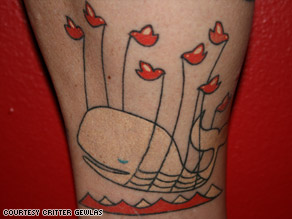
Twitter's "fail whale," which appears when the site is overrun, is so popular it's on T-shirts and even tattoos.

Twitter's "fail whale," which appears when the site is overrun, is so popular it's on T-shirts and even tattoos.

Click to view previous image
1 of 2
Click to view next image

That's because in the moment when frustration would hit, he's greeted on the popular Web site by a cartoonish image he loves: a giant whale being lifted out of an ocean by a small flock of tweeting birds.

The icon -- which Twitter users call it the "fail whale" because the creature appears only when the site has failed to load -- has gained a cult following as the social media site grows at breakneck pace.

The conversational Web site, which lets users post 140-character microblogs, saw a 1,374 percent jump in unique visitors between February 2008 and February this year, up to 7 million from only 475,000, according to Nielsen NetView.

By comparison, Facebook grew 228 percent, to 65.7 million users, during the same period.

With all of those new Twitterers, fail whale sightings and site crashes seem more frequent.

Bill (mr_bill on Twitter) and other fail-whale followers aren't bothered, though.

The 36-year-old San Franciscan has organized parties in honor of the whale. The most recent, held in California in February, was attended by more than 300 people, including Yiying Lu, the artist in Australia who created the image.

Bill says the whale represents a contrarian philosophy.

"It's sort of an adorable whale but also this thing that represents the Herculean tasks that we sometimes go about from day to day," he said.

"We're all trying to do a lot of things that seem pretty impossible," Bill said. "It's nice to identify something positive with those failures."

Not every Twitterer is sympathetic to the site's troubles, though.

Some users say Twitter has outgrown its core audience and is irrelevant to the technophiles who made it popular in the first place. Others are annoyed by the flood of spammers and profiteers who now use the site's popularity to make a buck.

Celebrities and members of Congress have been jumping onto the site in recent months, adding to the site's mainstream popularity and, some users say, causing glitches in the system.

"I keep getting the fail whale. Twitter got too popular too quickly. I blame Shaq," wrote Jessica Roy, a 21-year-old New York University student who goes by suchamessica on Twitter.

Basketball player Shaquille O'Neal, or THE_REAL_SHAQ, has more than 470,000 followers on the site.

Nova Spivack, a blogger whose article "Can Twitter Survive What is About to Happen to It?" has been passed around the site, said a rift is developing between Twitter's original "in crowd" and its newer, more mainstream users.

Early adopters find many of the new users annoying, he said.

"A lot of people come in, and they take that 'What are you doing?' question literally, and so they put very inane things on Twitter," he said. iReport.com: How do you feel about tweets and status updates?

The site used to feel "insulated" from the mainstream, and now it doesn't, he said.

But for all the complaints, there seem to be just as many people who are almost excited about Twitter's growing pains.

It is inevitable that a Web site seeing Twitter-style growth would face some glitches and a backlash from early adopters, said Laura Fitton, a consultant and co-author of the book "Twitter for Dummies."

"There's going to be all kinds of people using it all kinds of different ways," she said. "The purists can go pound rocks."

Major news such as the Mumbai terrorist attacks and the Hudson River plane landing has broken over Twitter, and that's added to the site's popularity, she said.

Amy Gahran, who writes on social media at contentious.com, said the backlash against Twitter stems from the fact that people are uncomfortable with change. Early users see new people coming to the site, and that creeps them out, but it shouldn't, she said.

"Change is freaking good," she said. "Roll with it."

As the site gets filled with fresh users, people are creating pieces of software to help Twitterers sort through the noise, Gahran said.

She said Twitter is popular because it mimics real-life conversation and because it's easy to use. She also expects Twitter to expand, especially as people in developing countries use cell-phone text messages to communicate through the site.

"People talk. That's what we do," she said. "We're social creatures. We're kind of wired for this."

Twitter says it is addressing breakdowns in that wired communication.

"We have made amazing progress from a technical perspective as far as accommodating this rapid growth goes and will continue to improve system and subsystem performance moving forward," Twitter co-founder Biz Stone wrote in a statement to CNN.

Critter Gewlas of Cary, North Carolina, believes so much in the site's ability to overcome adversity that he recently got a tattoo of the fail whale on his leg.

"The site itself has suffered a few scrapes and bumps along the way, but for the most part, I definitely think it's a good thing," said the 36-year-old.

The fail whale's account on Twitter has more than 2,265 followers. A Facebook group dedicated to the whale has more than 4,400 members. The whale has spawned art and merchandise, from coffee mugs to baby clothes. A Current.com parody of the whale has spun around the Internet, too.

Bill, whose fail whale parties have featured an aquamarine martini in honor of the icon's color, said the whale's popularity comes from the idea that failures are worth celebrating and learning from.

Twitter will use that philosophy to continue to grow, he said.

"Twitter is a powerful enough thing that it should succeed in a broad way, and I would like it to succeed in a broad way," he said.

Device allows plants to Twitter

WASHINGTON (Reuters) - Chances are you've never had a conversation with your house plants but if they could talk, what would they say? "Water me."

Photo


Researchers at New York University's interactive telecommunications program have come up with a device that allows plants to tell owners when they need water or if they've had too much via the social network blogging service Twitter.

"Obviously plants can't talk or Twitter directly, so we have to help them along with that," said Rob Faludi, co-creator of the device called Botanicalls.

The device is made of soil-moisture sensors that are connected to a circuit board. They measure the level of moisture, and then communicate the information to a microcontroller.

"There are settings in the software that allow you to set what kind of plant you're using and also adjust for characteristics of the soil, different soil has different qualities," said Faludi.

The device determines whether moisture levels are too low, or too high, and then transmits a wireless signal to Twitter, via the Internet, which lets people send short, 140-character text messages to their network of friends.

Botanicalls co-creator Kate Hartman said the language used in the Twitter messages can be personalized to suit the owner, or the type of plant.

"There's always a basic "I'm thirsty, could you please water me" message. But they also accelerate in terms of need, so there's an urgent message: "I'm desperately thirsty, please water me"," Hartman told Reuters.

GROWING TWITTER FOLLOWING

Due to word of mouth, Hartman's plant, 'Pothos,' has more than 2,300 subscribers on Twitter (twitter.com/pothos).

Every day followers receive messages updating them on the plant's soil moisture content, and whether it's being cared for.

"I feel a bit more guilty when I don't water Pothos, because everybody knows," laughed Hartman.

To date, Hartman and Faludi have sold nearly 100 of the Botanicalls kits for $99 each with the device needing to be assembled from basic parts which Faludi said can be challenging but worthwhile in the end.

"Actually receiving a message from a plant is just very engaging, and I think kind of unexpected. There's a magic to it that people really enjoy," said Faludi.

The new technology follows on from an earlier Botanicalls model released in 2007 that enabled plants to make a phone call to their owners when they needed water. Continued...

YouTube Gives Twitter Love

Google sprinkled a few extra features on YouTube last night, in a spring cleaning effort to catch up with the ever-popular Twitter. Viewers can now post a video they like on Twitter and users got a few tweaks when managing their content.

Everybody is integrating Twitter functionality these days, as the microblogging platform gains more user traction. The most prominent example is Facebook, which redesigned its whole news feed to accommodate the need for real-time updates. And now it's YouTube's turn, but with not so much glory.

The share links on YouTube now offer a Twitter posting option along Facebook and MySpace. Users can expand the box for more sharing options, but those three xare the ones YouTube promotes.

When you click on the Twitter button, a pop-up window will open your Twitter account and fill in automatically with text asking your followers to "check this video out" followed by the video's title and URL. Unfortunately, the video link is not shortened (using services like TinityURL or Bit.ly) but YouTube said it plans to add that "down the road."

Other improvements made their way onto YouTube as well. A new Flash uploader is in service, together with a long-expected upload progress bar. The site also promises an estimated video processing time after the upload in the near future. An official HD USL parameter has been added also, for sharing HD video links.

And when YouTube says "spring cleaning," it really means it: the video-watching pages are also tidied up, with smaller action links and no more tabs for comments, statistics and data (they are now collapsible using a little arrow). It is now easier to log in with Google Account credentials (if you Google and YouTube accounts are associated) with an all-in-one sign-in page.

YouTube also makes an attempt to take on Apple's iTunesU, with the YouTube EDU project, which collects and highlights educational content uploaded by colleges and universities on the site.

Twitter on the front line

Technology correspondent, BBC News
Police and protesters, Getty
Many used Twitter to let people know what was happening

There may have been few things that protesters, politicians and activists share, but during the G20 meeting, they were united by their use of Twitter.

The micro-blogging service was heavily used by all those involved with the meeting, be they in the debating chamber, quizzing politicians after briefings, or protesting beyond the police cordon.

Social media was in use prior to the event too. The Metropolitan Police analysed activity on websites such as Facebook, MySpace and many others to see how many were likely to join the call for protests at the G20.

Plans for how many policemen and women should be put on the streets during the G20 were drawn up with regard to this analysis.

Bridging fences

But it was during the two-day event that social media, in particular Twitter, came in to their own. Thousands of messages marked with a #G20 tag passed through Twitter and organisations such as IndyMedia had their own tags that helped to collate information about what happened during the protests.

Did they organise that via Twitter? I'd be surprised - it's a very public place to talk about something you don't want the police to hear.
Rory Cellan-Jones, Technology correspondent, BBC News

For Anjali Kwatra, a spokesperson for Action Aid, Twitter was essential in giving supporters outside a glimpse of what was happening inside the Excel centre.

"It definitely helps make that link with what people are out on the streets protesting about," she said.

It also let supporters know about the questions Action Aid campaigners were putting to politicians and their efforts to get their message across to the leaders of G20 nations.

The immediacy of the medium also appealed, said Ms Kwatra, adding that the 140 character limit gave messages an informality over other ways of communicating.

"We are also blogging, but that takes time and goes on to the Action Aid website, where people have to come in and look at it," said Ms Kwatra.

"It's a mix of both the observational and informative," she said.

Ground force

Dominic Casciani, from BBC News, who has been mixing with protesters across London, said many of the groups used Twitter as a way to reach out to supporters more quickly than they could with e-mail or text messages.

For instance, he said, the Climate Change campaigners who set up the camp on Bishopsgate used Twitter to rally supports to carry supplies - namely baked potatoes and beans - to the site where they planned to set up tents.

Screenshot of Twitter messages, Twitter
Twitter became an unofficial news channel for many

"It's not the defining tool because it's never going to replace the mobile phone or text message to close friends," he said, "but there's clearly something in broadcasting to subsets of people that are looking for specific information."

Richard Roaf, a spokesperson for People and Planet, said Twitter had been invaluable in helping smooth the organisation of the Bishopsgate Climate Camp.

Twitter was used to send regular updates as the camp was being set up and to let people know how it was progressing, he said.

With net and computer access literally thin on the ground, Twitter was, he said, the best option for reaching everyone.

And, he added, it proved even more valuable when the police moved in to break up the camp and scatter the protesters.

"Once the situation changed with the police, then it let people back here know what was going on," he told the BBC. "It was like a live TV channel, rather than an update after it had all happened."

For many, Twitter was a way to find out about and get to the independent media reports from people caught up in the protests. One of the messages most regularly re-tweeted was a link to video footage of the police breaking up the Climate Camp.

Using Twitter as an unofficial noticeboard let those who had lost touch on the ground find out what had happened to friends and fellow protesters during and after the police clear-up, said Mr Roaf.

Friends concerned about what had happened to people they knew were reassured to see messages from them posted on Twitter reporting that they were fine.